
Confessions of an encounter specialist A book by Kishalay B

An army officer splits open the anatomy of staged encounters in India’s North East and Jammu Kashmir, exposing the culture of killing with impunity in the new book, Blood on My Hands Confessions of Staged Encounters by Kishalay Bhattacharjee, seni…

An army officer splits open the anatomy of staged encounters in India’s North East and Jammu Kashmir, exposing the culture of killing with impunity in the new book, Blood on My Hands Confessions of Staged Encounters by Kishalay Bhattacharjee, senior journalist and author of Che in Paona Bazaar Source The Sangai Express Ninglun Hanghal

Read more / Original news source: http://e-pao.net/ge.asp?heading=16&src=250915

‘Map shows Dzuko valley located within Manipur boundary’

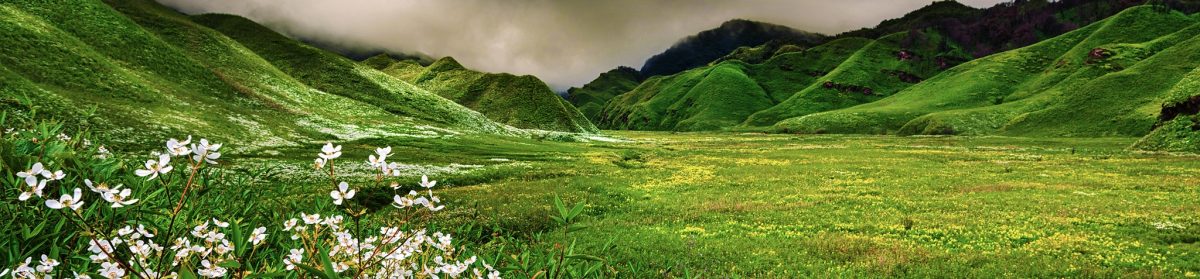
Dzuko valley is clearly shown located within the boundary of Manipur on the map of the erstwhile British India Government, said Manipur State Archives Deputy Director Md Abul Kalam Source The Sangai Express

Dzuko valley is clearly shown located within the boundary of Manipur on the map of the erstwhile British India Government, said Manipur State Archives Deputy Director Md Abul Kalam Source The Sangai Express

Read more / Original news source: http://e-pao.net/ge.asp?heading=14&src=250915

MTFD calls for hillvalley separation

Representatives of Manipur Tribals Forum, Delhi MTFD along with some Members of the Autonomous District Council ADC of Churachanpur met Ashok Prasad, Internal Security, Special Secretary in the Ministry of Home Affairs yesterday to apprise him of t…

Representatives of Manipur Tribals Forum, Delhi MTFD along with some Members of the Autonomous District Council ADC of Churachanpur met Ashok Prasad, Internal Security, Special Secretary in the Ministry of Home Affairs yesterday to apprise him of the meeting with President Pranab Mukherjee on September 22 and called for the separation of the hills and valley Source The Sangai Express

Read more / Original news source: http://e-pao.net/ge.asp?heading=7&src=250915

Mizoram CM defends letter to PM

Mizoram Chief Minister Lal Thanhawla has defended his letter to Prime Minister Narendra Modi on the violence in Manipur over its State Assembly passing three controversial Bills, and said he wanted to help his people in the neighbouring State Source …

Mizoram Chief Minister Lal Thanhawla has defended his letter to Prime Minister Narendra Modi on the violence in Manipur over its State Assembly passing three controversial Bills, and said he wanted to help his people in the neighbouring State Source The Sangai Express Agencies

Read more / Original news source: http://e-pao.net/ge.asp?heading=12&src=250915

Political heavyweights join BJP

Heavyweights and veterans of electoral politics namely O Joy, former Chief Minister Radhabinod Koijam as well as former DGP Y Joykumar have joined BJP and their memberships have been approved by the party’s National executive member and Manipur in char…

Heavyweights and veterans of electoral politics namely O Joy, former Chief Minister Radhabinod Koijam as well as former DGP Y Joykumar have joined BJP and their memberships have been approved by the party’s National executive member and Manipur in charge Prafulla Prahlad Patel Source The Sangai Express

Read more / Original news source: http://e-pao.net/ge.asp?heading=6&src=250915

JAC to consult others before responding to talk invite slams divisive propaganda Issue has received National, Intl response JAC

The JAC Churachandpur has today said it will first consult all the tribal apex bodies before responding to any invitation for talks that has been extended to them by the Government as the present crisis involves all the hill tribes of Manipur Source …

The JAC Churachandpur has today said it will first consult all the tribal apex bodies before responding to any invitation for talks that has been extended to them by the Government as the present crisis involves all the hill tribes of Manipur Source The Sangai Express

Read more / Original news source: http://e-pao.net/ge.asp?heading=1&src=250915

Govt sends 3rd talk invitation

The Churachandpur JAC which has been spearheading the public agitation in the district against the three Bills passed by the Manipur Legislative Assembly on August 31 for protection of indigenous people of Manipur has been invited for a dialogue for th…

The Churachandpur JAC which has been spearheading the public agitation in the district against the three Bills passed by the Manipur Legislative Assembly on August 31 for protection of indigenous people of Manipur has been invited for a dialogue for the third time Source The Sangai Express

Read more / Original news source: http://e-pao.net/ge.asp?heading=5&src=250915

Chhibber to grace international day for older persons

Vijay Chhibber, IAS, Secretary, Ministry of Road Transport Highway Govt of India has consented to grace the international day of older persons at Ukhrul, reports our correspondent Source The Sangai Express

Vijay Chhibber, IAS, Secretary, Ministry of Road Transport Highway Govt of India has consented to grace the international day of older persons at Ukhrul, reports our correspondent Source The Sangai Express

Read more / Original news source: http://e-pao.net/ge.asp?heading=17&src=250915

RIMS’ first

Regional Institute of Medical Sciences RIMS , in a bid to compete with other private medical centres, conducted its first ‘Angioplasty Stenting’ procedure on a patient who was admitted to the hospital after a heart attack Source The Sangai Express

Regional Institute of Medical Sciences RIMS , in a bid to compete with other private medical centres, conducted its first ‘Angioplasty Stenting’ procedure on a patient who was admitted to the hospital after a heart attack Source The Sangai Express

Read more / Original news source: http://e-pao.net/ge.asp?heading=4&src=250915

GOCinC Eastern Command visits State

Lt Gen Praveen Bakshi, General Officer Commanding in Chief, Eastern Command accompanied by Lt Gen Bipin Rawat, General Officer Commanding, 3 Corps arrived in the State on a one day visit to Imphal today Source The Sangai Express

Lt Gen Praveen Bakshi, General Officer Commanding in Chief, Eastern Command accompanied by Lt Gen Bipin Rawat, General Officer Commanding, 3 Corps arrived in the State on a one day visit to Imphal today Source The Sangai Express

Read more / Original news source: http://e-pao.net/ge.asp?heading=13&src=250915

Id greetings

Governor of Manipur Dr Syed Ahmed has extended warm greetings and good wishes to the people of Manipur especially to Muslim brethren on the auspicious occasion of Id Ul Zuha Source The Sangai Express

Governor of Manipur Dr Syed Ahmed has extended warm greetings and good wishes to the people of Manipur especially to Muslim brethren on the auspicious occasion of Id Ul Zuha Source The Sangai Express

Read more / Original news source: http://e-pao.net/ge.asp?heading=3&src=250915

Public discussion

A public discussion on the steps that must be taken up by people to end the political conflict between Manipur and the Indian Union was held today at Heingang Mayai Leikai, Thangapat Mapal under the aegis of the Coalition for Indigenous Rights Campaign…

A public discussion on the steps that must be taken up by people to end the political conflict between Manipur and the Indian Union was held today at Heingang Mayai Leikai, Thangapat Mapal under the aegis of the Coalition for Indigenous Rights Campaign CIRCA Source The Sangai Express

Read more / Original news source: http://e-pao.net/ge.asp?heading=2&src=250915

Promote indigenous value systems RPF Prez1

RPF President Irengbam Chaoren has called upon all the indigenous people of Manipur to prevent permanent settlement of Indian people Source The Sangai Express

RPF President Irengbam Chaoren has called upon all the indigenous people of Manipur to prevent permanent settlement of Indian people Source The Sangai Express

Read more / Original news source: http://e-pao.net/ge.asp?heading=11&src=250915

Tangkhuls commemorate 70 years of Suisa’s ‘New Political Organization’

The Suisa Trust, Ukhrul in association with Tangkhul civil society organizations today organized the 70th anniversary of New Political Organization formed by late Rungsung Suisa at UBC Church Kamphasom, Ukhrul Source The Sangai Express Mungchan Zi…

The Suisa Trust, Ukhrul in association with Tangkhul civil society organizations today organized the 70th anniversary of New Political Organization formed by late Rungsung Suisa at UBC Church Kamphasom, Ukhrul Source The Sangai Express Mungchan Zimik

Read more / Original news source: http://e-pao.net/ge.asp?heading=15&src=250915

‘Map shows Dzuko valley located within Manipur boundary’ – E-Pao.net

‘Map shows Dzuko valley located within Manipur boundary’
E-Pao.net
Imphal, September 24 2015: Dzuko valley is clearly shown located within the boundary of Manipur on the map of the erstwhile British-India Government, said Manipur State Archives Deputy Director Md Abul Kalam. Talking to The Sangai Express, he said that …

and more »

'Map shows Dzuko valley located within Manipur boundary'
E-Pao.net
Imphal, September 24 2015: Dzuko valley is clearly shown located within the boundary of Manipur on the map of the erstwhile British-India Government, said Manipur State Archives Deputy Director Md Abul Kalam. Talking to The Sangai Express, he said that …

and more »

Read more / Original news source: http://news.google.com/news/url?sa=t&fd=R&ct2=us&usg=AFQjCNH4ZX8qL7sQJXOR032bwPi7AGudaQ&clid=c3a7d30bb8a4878e06b80cf16b898331&cid=52778958076754&ei=86EEVpjdCIa13gHR1omAAw&url=http://e-pao.net/ge.asp?heading%3D14%26src%3D250915

‘Map shows Dzuko valley located within Manipur boundary’ – E-Pao.net

‘Map shows Dzuko valley located within Manipur boundary’
E-Pao.net
Imphal, September 24 2015: Dzuko valley is clearly shown located within the boundary of Manipur on the map of the erstwhile British-India Government, said Manipur State Archives Deputy Director Md Abul Kalam. Talking to The Sangai Express, he said that …

and more »

'Map shows Dzuko valley located within Manipur boundary'
E-Pao.net
Imphal, September 24 2015: Dzuko valley is clearly shown located within the boundary of Manipur on the map of the erstwhile British-India Government, said Manipur State Archives Deputy Director Md Abul Kalam. Talking to The Sangai Express, he said that …

and more »

Read more / Original news source: http://news.google.com/news/url?sa=t&fd=R&ct2=us&usg=AFQjCNH4ZX8qL7sQJXOR032bwPi7AGudaQ&clid=c3a7d30bb8a4878e06b80cf16b898331&cid=52778958076754&ei=86EEVpjdCIa13gHR1omAAw&url=http://e-pao.net/ge.asp?heading%3D14%26src%3D250915

Seeking a resolution

Let all stakeholders agree to have the trouble in the state end. Let those who agitated for the introduction of the ILPS, for which they got the three contested bills,

Let all stakeholders agree to have the trouble in the state end. Let those who agitated for the introduction of the ILPS, for which they got the three contested bills, and those objecting to the three bills, agree to sit down to come to a consensus on necessary rectifications, so that the contentious issue can be once and for all put to rest. Although the amendment sought to the existing MLR&LR Act has been cited as the most objectionable by those opposed to the three bills, we see the bigger problem actually stems from the definition of “Manipur People” in the first and the only original of the three bills, which takes 1951 as the base year for deciding domicile. As had been explained by many, the 1951 census could not have had the reach and spread to cover all sections of the population, especially those living in remote tribal pockets. To this we may add, there would have been people moving gradually into the state after the date, both non-sedentary tribes on the eastern borders as well as economic migrants from the western border. This nature of migration has been happening through human history, and all must be ready to take cognizance and absorb this, for it harms no one. It is only the sudden bursts of population movements, caused by wars, natural disasters, economic collapses which are causes for alarm. As a thumb rule, population movements which are gradual, and which tend to integrate with the local milieus and become part of it, enriches the cultures of the places, while those who come with the intent of colonising are the ones who can pose a threat to the local populations. It is important to distinguish between the two.

Manipur’s culture has been enriched and nurtured through the centuries by the earlier kind of cultural cross-pollination. Look at our cuisines, both non-vegetarian and vegetarians. Of the non-vegetarian dishes, there is a rich array, perhaps as many as there are different ethnicities in the state, as most communities here are meat eaters. The richness of meat being such, it does not need too much embellishment to become an attractive meals. However, it is vegetable dishes which need this extra treatment to delight the palate. The Meiteis especially have evolved their vegetarian meals into fine art, and it is not too infrequently that one encounters people, especially from vegetarian India who have visited Manipur, vouching from the heart that Manipur’s vegetarian meals served at its temples, are the tastiest anywhere in India. This tribute comes from a nation which has more vegetarians than all vegetarians from the rest of the world put together. Obviously, in this case the cross-pollination has been from the west. Take a look at the fruits and flowers whose names suggest they were originally not indigenous, but later came to be indigenised. Awa-thabi from Burma, pung-ton from Shan, khaki- leihou from China, awa-phadigom, mayang-ton, etc., and the list is long. All these also suggest the cultural influences which came from the east brought in by migrants, travellers or else brought back by travellers and traders from here. This is why, all over the world, open cultures rather than closed, xenophobic ones are the richest. Surely we do not want to trickle off this glorious tradition of openness, and the rich dividends this has paid throughout history.

Manipur’s demographic situation is nowhere near critical yet, unlike many other Northeast states, Assam included. But it will become so if further influx is not checked. The moot point is, let the objective be to check further influx and not worry too much about what has already happened. Either take the current date as the cut-off, or else back date by about a decade or so, just the time internationally accepted as the period for naturalisation of citizenship. This will be fair and humane, therefore also acceptable before international law. The MLR&LR Act is another thing altogether, and let it be where is has been all this while, until the hill districts feel ready to be integrated into the march of modern economy. Assure this too, to those opposed to the three bills. In the meantime, we are convinced that some degree of autonomy of the two regions from each other is essential so that each can be their own selves without the other coming in the way.

Read more / Original news source: http://kanglaonline.com/2015/09/seeking-a-resolution/

Sustainable Tourism: A Failure To Link Theory To Practice

By Laifungbam Debabrata Roy Another World Tourism Day is round the corner. Government agencies, the hospitality industry and motivated tour operators will join hands to celebrate this day yet again.

By Laifungbam Debabrata Roy

Another World Tourism Day is round the corner. Government agencies, the hospitality industry and motivated tour operators will join hands to celebrate this day yet again. Many others will organise events to follow suit. But where is tourism going? The economies of Thailand and Nepal, heavily dependent on tourism, are the worst economies of the Asian region. Is there a lesson to be learnt?

Since the mid-90s a lot of criticism of tourism emerged, especially new forms of tourism and the way it is being uncritically sought to be expanded. The initial criticisms were more in the nature of a challenge to start thinking and discussing critically about this sector; but since then, empirical knowledge has increased to base a more informed appraisal of the experience.

The progress in a promoting a more locally rooted, more equitable and environmentally friendly tourism in the past 20 years has been painfully slow. Understanding the reasons why this is so, and overcoming obstacles to change, remains a fundamental challenge.

Despite the significant attention paid by tourism academics and practitioners to sustainable tourism development in recent years, there has been a consistent failure within the tourism literature to relate the concept to the theory of its parental paradigm, sustainable development. As a result, the applicability of sustainable development to the specific context of tourism is rarely questioned. What remains still to emerge is a practical model of development theory and the notion of sustainability, which is possible to compare against the principles of sustainable tourism.

Tourism development remains embedded in early modernisation theory whilst the principles of sustainable tourism overlook the characteristics of the production and consumption of tourism. As a result, significant differences between the concepts of sustainable tourism and sustainable development are revealed, suggesting that the principles and objectives of sustainable development cannot be transposed onto the specific context of tourism.

The United Nations is on the brink of bringing into action a set of 17 Sustainable Development Goals (SDGs) and 169 targets that aims to “Make Poverty History”. It is a unique tool designed primarily for negotiators, technical support teams and other actors engaged in defining a universal, integrated and transformational set of global goals and targets for sustainable development and the political declaration on the post-2015 development Agenda. SDG No.1 addresses just that – to end extreme poverty by 2030! SDG No. 13 also aims to stop climate change. These are definitely very tall orders.

The “jewels” of new tourism from the Maldives to Kiribati and Tuvalu in the Pacific are today in very real danger of literally disappearing under the rising ocean waves, whereas global inequality is rapidly accelerating! Unless Western consumption style practices are seriously curbed, and their rapid spread seriously tempered (especially in China and India where industrialisation is breathtaking), there is a disastrous implication looming. Tourism needs to take its temperature within this global context of change and decide its path in averting or encouraging the onset of this crisis.

Globalisation is the mantra being promoted globally by the G-8 countries, recognised now as the single global imperial power. Spread of consumerist lifestyles associated with their political and economic platforms gave rise to a number of movements to counter-balance this push. Prime among these is the anti-globalisation movement that makes its presence felt in each meeting of the G-8 powers. The “Pink Tide” of Latin America is a potentially significant challenge to counter-balance the G-8 powers’ wisdom and appropriateness in pursuing the “Washington Consensus”. The “war on terror” has also resulted in very significant changes in our patterns of behaviour and movement. All these trends of events, consumption behaviour and movement have direct and indirect effects on the development of tourism.

The December 2004 Asian Tsunami, the 2015 Nepal Earthquake which affected millions of people across many countries with many thousands of people who tragically lost their lives seem to stand for the fragility and resilience of tourism. The rebuilding and rehabilitation that follow these disasters provides a reminder of the potential advantages of locally generated and led development. In Thailand and India, after the tsunami, local people were literally transported out from their lands, which were grabbed by the lure of tourism dollars.

Manipur is embarking on a potentially dangerous trend of tourism development that is ill-informed, unsustainable, non-participatory and denies the essential creation of jobs, promotes local culture and products, understanding and stewardship of local ecosystems. This is being led by a government that is notoriously ignorant, contemptuous of democracy and people’s aspirations and living in a make belief world that is blind to the an inclusive development agenda awakening across the world today.

The government of Manipur, spearheading this headlong rush and gush in tourism, has yet to begin to try to understand the arguments and needs for new models of Third World tourism. This ranges from the appearance of a viable and sustainable development theory to fair-trade practices and pro-poor development potential. The promotion of people-centred approaches to development must take precedence over many other existing priorities, and this should find resonance with pro-poor, community-centred, tourism initiatives as a counter-balance to top-down and trickle-down approaches to tourism master planning in Third World destinations – something glaringly missing today in Manipur. At the same time, we have to guard against development spin and liberal use of ‘pro-poor’ as a development prefix, in the same way that ‘eco-’ became a prefix in the tourism industry.

The core of the argument remains in that development is an inherently unequal and uneven process, symbolised by the diasporic and increasingly thwarted movements of Third World migrants to the First World, starkly contrasted by accelerating movements of relatively affluent Western tourists to the Third World and the ideology of freedom of movement that supports this.

The question is can new forms of tourism become a significant game changer in Manipur’s development? In the context of increasing inequality, perpetuating social and ethnic hostilities and poverty, the overall size of the tourism industry (often invoked by tourism advocates to explain why it should be a major force in development) and the advances made, I would advise that we remain cautious. According to the UN, the progress in reducing poverty has now has slowed depressingly to a “snail’s pace”. We need to start from an assessment of the structures and powers that would determine the fate of tourism in Manipur. It is, perhaps, only too easy to be seduced by the possibilities inferred from what remain very few examples of positive change. This is not a “do nothing” prescription but a contribution to understanding the wider regional and global contexts within which tourism operates and from which responses must be forged.

Read more / Original news source: http://kanglaonline.com/2015/09/sustainable-tourism-a-failure-to-link-theory-to-practice/